



One of the biggest questions travelers ask before landing in China is: “Will my phone’s roaming network or hotspot let me bypass the Great Firewall?”
The Great Firewall of China (GFW) is the government’s Internet filtering system — blocking access to many popular global platforms like Google, Facebook, Instagram, WhatsApp, and YouTube. Understanding how roaming and mobile data actually behave inside the country helps you avoid frustration and stay legally connected.
Let’s explore what really happens when you use international roaming, tethering, or an eSIM in China — and what the safe, reliable alternatives are in 2026.
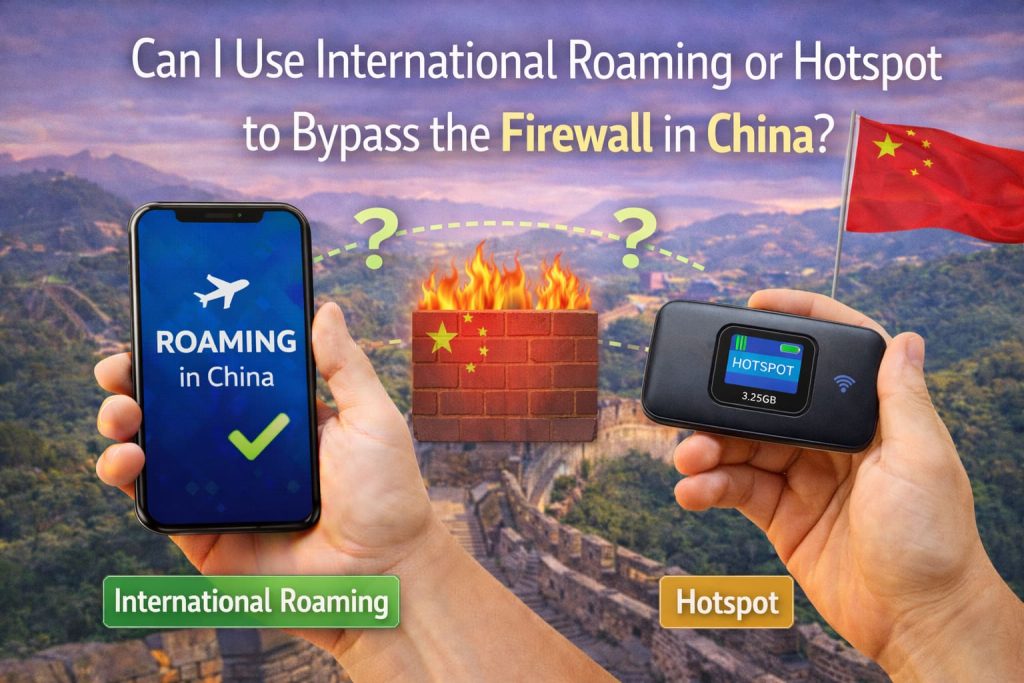
I. How the Great Firewall Works
China’s Internet system filters traffic at the national network gateway. This means that any Internet connection routed through Chinese carriers (like China Mobile, China Telecom, or China Unicom) passes through filters that block overseas platforms and apps.
What’s restricted:
- Google (Search, Maps, Gmail, Drive)
- Meta (Facebook, Instagram, WhatsApp)
- X (Twitter)
- Western news sites and cloud services
VPNs used to be the most common workaround, but unapproved VPNs are now often monitored or restricted.
So, travelers often wonder: if you use foreign roaming data instead of a Chinese SIM, will it get you around this firewall?
II. Does International Roaming Bypass the Chinese Firewall?
The short answer is: Yes, sometimes — but not guaranteed.
Here’s how it works technically:
- When you’re on international roaming, your phone connects to a local Chinese network tower, but your data is tunneled back to your home carrier abroad (e.g., AT&T, Vodafone, Orange).
- Because your Internet traffic exits through a foreign gateway, it usually avoids China’s firewall filtering.
- In simple terms — your connection may appear as if it’s coming from your home country, so blocked apps like Google or WhatsApp still work.
However, there are major downsides:
| Issue | Impact |
| Costs | Roaming data can reach $10–$50 per day. |
| Speed | Data routes internationally — slower and unstable. |
| Coverage | Roaming partners depend on where your carrier has agreements. |
| Legality | Technically allowed, but not recommended for long‑term use due to inconsistent service. |
So while international roaming can temporarily bypass the firewall, it’s expensive and unreliable — not sustainable for extended travel or remote work.
III. Can You Bypass the Firewall Using a Hotspot or Tethering?
If your roaming SIM or device connects to the Internet through a foreign carrier, and you share that via personal hotspot, your connected devices (like laptops) may also enjoy unfiltered access.
But again, there are limitations:
- It only works while your main SIM is roaming (costly).
- Data speeds drop sharply when multiple devices share one network.
- Carriers may block or throttle hotspot tethering abroad.
So yes, the hotspot “inherits” the foreign data route, but it comes with short range and high cost, making it only viable for quick use or emergencies.
IV. The Safer and Smarter Alternative — Local Data eSIMs
Using a local or regional eSIM is the most reliable way to stay connected in China without worrying about blocked apps or heavy fees.
Services like [https://chinaesim.com/] specialize in China eSIMs that don’t require a VPN, allowing you to browse global Internet platforms directly, including Google and social media.
Key benefits of China eSIMs:
- ✅ No VPN needed — unrestricted browsing access.
- ✅ Instant online setup — scan a QR code, activate in minutes.
- ✅ Affordable plans — from $2.50 for short stays.
- ✅ Nationwide 4G/5G coverage through China Mobile, China Telecom, and China Unicom.
- ✅ Multi‑region eSIMs available (China + Hong Kong, Japan, Korea, etc.).
- ✅ Hotspot sharing enabled — use on multiple devices.
Unlike traditional SIMs or costly roaming, these digital eSIMs deliver stable, high‑speed access without requiring a VPN or physical card swap.
V. Example Scenarios
- Traveler on AT&T Roaming
You might access Google normally because your data exits through the U.S. gateway — but you’ll spend ~$80 for a few days of usage.
- Business users using hotel WiFi + VPN
Possible but inconsistent; local WiFi networks route through the firewall unless you use an approved or enterprise VPN service.
- Tourists using China eSIM from ChinaeSIM.com
You enjoy direct open access to apps and websites, 4G/5G speed, and low cost — all with no VPN setup and coverage across Shanghai, Beijing, and Chengdu.
VI. Expert Verdict
| Connection Type | Bypasses Firewall? | VPN Needed? | Cost & Ease | Verdict |
| International Roaming | ✅ Sometimes | ❌ No | 💰 Very Expensive | ⚠️ Short‑term only |
| Hotspot from Roaming SIM | ✅ Yes (limited) | ❌ No | 💰💰 Costly, unstable | ⚠️ Temporary use |
| Local Chinese SIM | ❌ No | ✅ Yes | 💵 Cheap | 🔒 Restricted |
| China eSIM (No VPN) | ✅ Yes | ❌ No | 💚 Affordable & instant | ⭐ Best Option 2026 |
VII. Final Thoughts
Yes — international roaming and mobile hotspots can sometimes bypass China’s firewall because the data uses a foreign network route. But they’re unreliable, expensive, and inconsistent for travelers who need everyday connectivity.
For a stable, fast, and worry‑free experience, digital travelers in 2026 are turning to modern eSIM technology. Providers like [https://chinaesim.com/] offer secure, no‑VPN eSIM plans that bring open Internet access across all of mainland China — without roaming charges or setup hurdles.
If you want unrestricted maps, Gmail access, WhatsApp calling, or social media posting in China, this is the most practical and cost‑effective approach.