China eSIMs
City eSIMs
Regional eSIMs
A prepaid China SIM card from China Mobile, China Unicom, or China Telecom gives 4G/5G mobile data, calls, and a local +86 phone number. It costs around $5-$15 at airport kiosks and carrier stores, but require passport registration.
Getting a working China SIM card is not as simple as landing. The process requires passport registration for new SIM purchases. Meanwhile, the Great Firewall blocking Google Maps, WhatsApp and most Western apps oftern catches first-time visitors off guard.
In this guide, we compare some of the most popular China SIM Cards for tourist, their prices in USD and explain where each option falls short, because your SIM card determines whether you can access your everyday apps.
If you want to skip ahead to digital options, see also our China eSIM plans, starting from $2.50 USD.
Traveling across China offers unparalleled cultural experiences, but navigating the country requires preparation. International roaming with your home carrier typically costs $10-$15 per day, and speeds are often throttled.
While Wi-Fi is standard in modern Chinese hotels and cafes, accessing these networks almost universally requires an active Chinese mobile number to receive an SMS verification code, which means you cannot connect until you already have a local SIM.
A China prepaid SIM card solves this from just a few dollars. You get fast 4G/5G data on the go, plus a Chinese phone number that lets you register on apps Chinese locals use daily: Alipay for payments, WeChat for messaging, and Didi for ride-hailing.
Mobile data in China is quite cheap compared to Western standards. The overall China sim card price depends on your chosen Chinese mobile operator and whether you buy at an airport kiosk or a downtown retail branch.
Below is a unified comparison of the standard prepaid tourist options available for travelers as of 2026.
| Carrier/Provider | Plan type | Data | Validity | Estimated Cost | GFW Bypass |
|---|---|---|---|---|---|
| China Mobile | Physical Tourist SIM | 1 GB / Day | 7 Days | $8 – $12 | No (Requires VPN) |
| China Mobile | Prepaid Monthly Plan | 5 GB (Total) | 30 Days | $13 – $18 | No (Requires VPN) |
| China Unicom | Physical Tourist SIM | 1 GB / Day | 7 Days | $7 – $10 | No (Local apps only) |
| China Unicom | Prepaid Monthly Plan | 3 GB (Total) | 30 Days | $10 – $15 | No (Requires VPN) |
| China Telecom | Physical Tourist SIM | 2 GB (Total) | 7 Days | $5 – $8 | No (Requires VPN) |
| Chinaesim.com | Travel eSIM | Flexible / Unlimited | 1 – 30 Days | Starts at $2.50 | Built-in VPN |
To avoid running out of cellular data while navigating unfamiliar cities, consider your standard consumption habits. Below is an analytical breakdown of data requirements for a typical china tourist sim card user:
| Usage | Daily Need | 3 – 5 Days | 7 – 10 Days | 15 – 30 Days |
|---|---|---|---|---|
| Light (maps, messaging, email) | 300-500 MB | 1-3 GB | 3-7 GB | 5-15 GB |
| Moderate (social media, photos, video calls) | 500 MB – 1 GB | 3-5 GB | 7-10 GB | 15-30 GB |
| Heavy (streaming, hotspot, video uploads) | 1-3 GB | 5-15 GB | 10-30 GB | 30-60 GB |
Most tourists on a 7-10 day trip use 500 MB-1 GB per day. A 1 GB/day plan covers moderate use including Google Maps navigation, WhatsApp messaging, and occasional social media.
The telecommunications network across mainland China is strictly state-regulated and operated by three major carriers. All of them provide stable 4G and widespread 5G connections, but they differ in coverage, phone compatibility, and price.
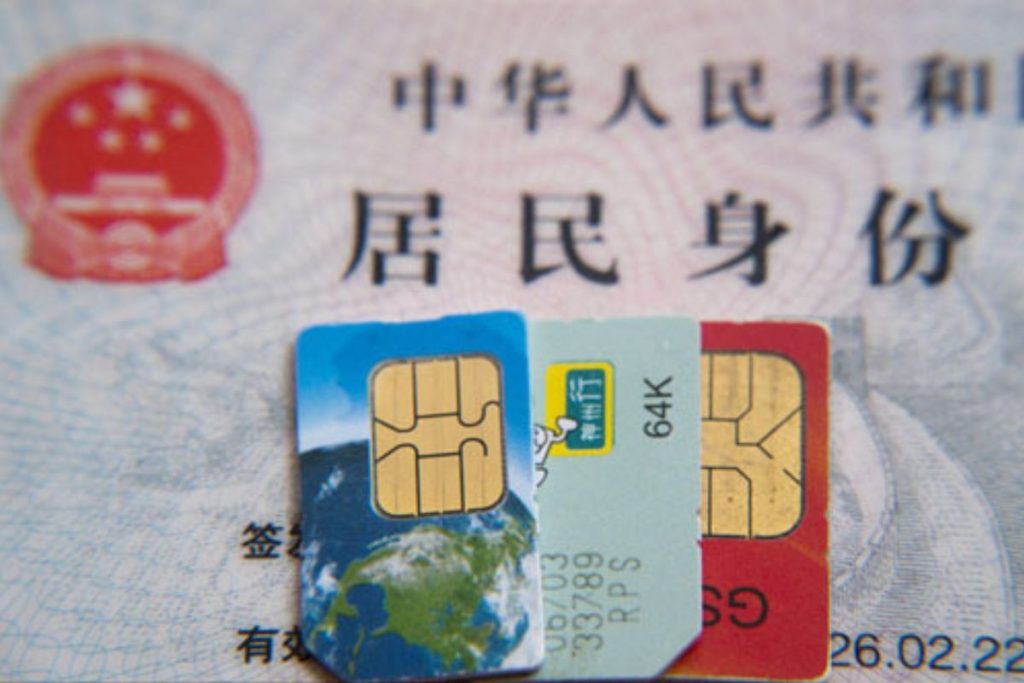
China Mobile is the world’s largest mobile carrier. It boasts unparalleled coverage, making it the premier choice if your itinerary goes beyond major cities: into rural villages, mountainous scenery, western territories, or historic overland paths across Tibet and Xinjiang.
China Unicom SIM Card is highly favored by urban tourists. Its infrastructure uses the universally standardized FDD-LTE bands, meaning all iPhones, Pixels, and Samsung Galaxy phones brought from abroad work without issues.
China Telecom provides extremely economical entry packages, but it remains a minor player for foreign short-term tourists due to network limitations.
Our recommendation: For most tourists visiting major cities, China Unicom offers the best balance of price and compatibility. For rural or western China travel, China Mobile is worth the extra cost.
All major international airports — including Beijing Capital (PEK), Shanghai Pudong (PVG), and
Guangzhou Baiyun (CAN) — have authorized retail counters in the arrivals hall right past the customs
checkpoints. Staff members are fully accustomed to handling international passports and and can set up your phone on the spot.
The process takes about 15–30 minutes with your passport.
Note: Do not rely entirely on airport kiosks if your flight lands during off-peak schedules. Extensive traveler reports confirm that official carrier desks at airports like Shanghai Pudong regularly close down completely between 10:00 PM and 7:00 AM, leaving late-night arrivals with no physical connection options.
For terminal-specific locations and hours, see our airport SIM card guide.
Purchasing a SIM within a major city center is cheaper than at the airport, but it demands careful navigation. Under strict national regulations, only major flagship carrier stores have the specialized scanner hardware to process and register a foreign passport. Smaller neighborhood shops and convenience stores cannot register international IDs.
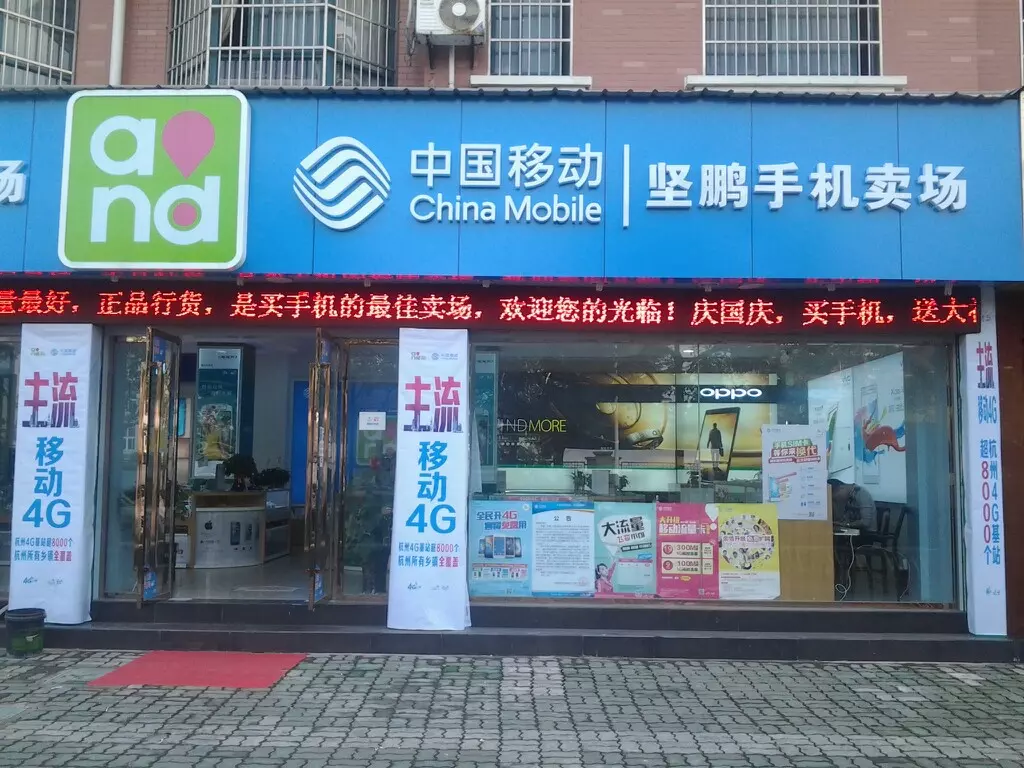
When executing an in-store registration, you must provide your physical original passport (photocopies or digital images are rejected). Because English fluency can be rare, use offline translation or save firsthand your request in Chinese to present to the staff.
Arriving in China and need a simpler way to stay connected? Consider a China eSIM from Chinaesim.com, a convenient alternative to traditional physical SIM cards.
If your phone supports eSIM (check compatibility here), you have a second option that skips the airport line entirely.
Here’s why you should choose China eSIM for your trip:
The three major cellular networks in China are China Mobile, China Unicom, and China Telecom. China Mobile is the largest.
Yes, Chinese law requires all mobile users to provide their real name, identity document, and photo during SIM card registration since 2013 for surveillance purposes.
Yes, you can buy a SIM card in China at the airport or in local phone stores in the city center. However, buying at the airport, be it Beijing airport or Shanghai airport, is an easier option which allows you to get connected right away after arrival without having to go to local phone stores.
Using VPN is legal in China. Although China has restrictions in VPN usage and blocks a number of VPN providers, customers can legally use VPNs that work in China.
>> Learn more about: VPN for China: Top Options and Alternative
Common plans include ~100 RMB/month for 30GB 4G data and unlimited calls on China Mobile, or ~50 RMB for 2GB daily data add-on. China Unicom has similar plans at comparable prices.
Yes, many foreign websites are blocked. A VPN is required to access unrestricted internet, though VPNs do not always work smoothly due to blocking efforts.
Yes, a Hong Kong SIM card can work in mainland China, but there are some important considerations:
– Coverage: While many Hong Kong SIM cards offer roaming services in mainland China, the coverage and quality may vary depending on the provider.
– Roaming Charges: Using a Hong Kong SIM card in China often incurs higher roaming fees compared to using a local Chinese SIM card. Be sure to check the rates with your provider.
For optimal connectivity and cost-effectiveness, obtaining a SIM card for China is generally recommended for extended stays or frequent usage.
Get Started
Useful Guide