China eSIMs
City eSIMs
Regional eSIMs
China Unicom is one of China’s three national mobile carriers and a popular option for international travelers who want a local SIM card. If you’re deciding whether to buy a China Unicom SIM, wondering how much it costs, or trying to choose between a physical SIM and an eSIM, this guide covers everything you need to know before your trip.
The guide also helps you know how good China Unicom’s coverage is, where to buy a SIM, which tourist plans are available, and when a travel eSIM might be the better choice.
👉 Ready to skip the airport queue? Browse best eSIM plans for China Unicom:
China Unicom was founded in 1994 and is headquartered in Beijing. It operates nationwide mobile, broadband, cloud, and enterprise network services across mainland China.
With roughly 350 million mobile subscribers, it is China’s third-largest mobile carrier after China Mobile and China Telecom.
For travelers, China Unicom is known for:
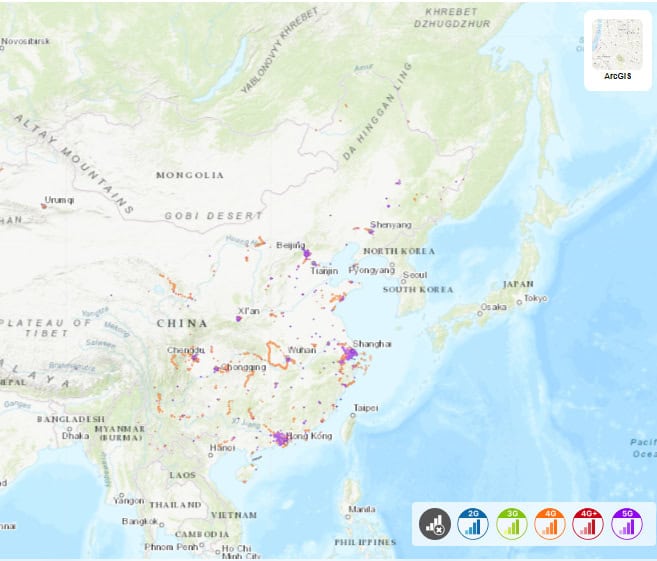
China Unicom has strong 4G and 5G coverage across most places that travelers actually visit in China. You’ll usually get a reliable signal in major cities, airports, and popular tourist destinations like Beijing, Shanghai, Guangzhou, and Shenzhen.
Coverage is strongest along China’s eastern coast. If you’re traveling to remote western provinces or mountainous areas, China Mobile generally has better coverage than China Unicom.
One thing doesn’t change: coverage doesn’t bypass China’s internet restrictions. Google, WhatsApp, Instagram, Facebook, and YouTube remain blocked on a standard China Unicom SIM.
If you want to check coverage before your trip, you can also look at nPerf’s live China Unicom coverage map.
In cities, China Unicom’s 5G can be very fast. Some travelers have reported speeds above 400 Mbps in central Shanghai, although actual speeds depend on your location, network congestion, and signal strength. In weaker coverage areas, speeds are often closer to 50–170 Mbps.
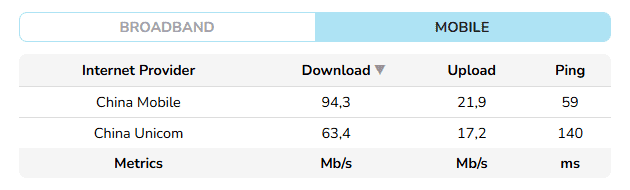
Official China Unicom tourist SIM plans typically cost 100–250 RMB, depending on how many days and how much data you need.
The prices below are based on the official tourist SIM packages available at Beijing Capital International Airport and are a useful reference for travelers visiting China.
| Plan | Price | Data | Voice | SMS |
|---|---|---|---|---|
| 7-Day | 100 RMB (~$14) | 30GB | 100 min | None |
| 10-Day | 130 RMB (~$18) | 40GB | 150 min | 50 free |
| 15-Day | 150 RMB (~$21) | 40GB | 200 min | None |
| 30-Day | 250 RMB (~$35) | 50GB | 300 min | None |
If you run out of data or minutes before your plan expires, China Unicom charges standard out-of-package rates. You can also top up most tourist SIMs through the China Unicom App, WeChat Pay, or Alipay.
| Service | Cost |
|---|---|
| Extra data | 5 RMB/GB |
| Local calls | 0.15 RMB/min |
| SMS | 0.1 RMB/message |
| Receiving SMS | Free |
You can buy a China Unicom SIM at major airports and official China Unicom stores across China. If you want to get connected as soon as you land, airport counters are the easiest option. If you’re looking for a lower price, official stores in the city are usually a better choice.
China Unicom has arrival-hall counters at major international airports, including:
These counters are familiar with serving international travelers, so buying a SIM with a passport is usually quick and straightforward. For airport-specific locations and opening hours, see our airport SIM card guide.
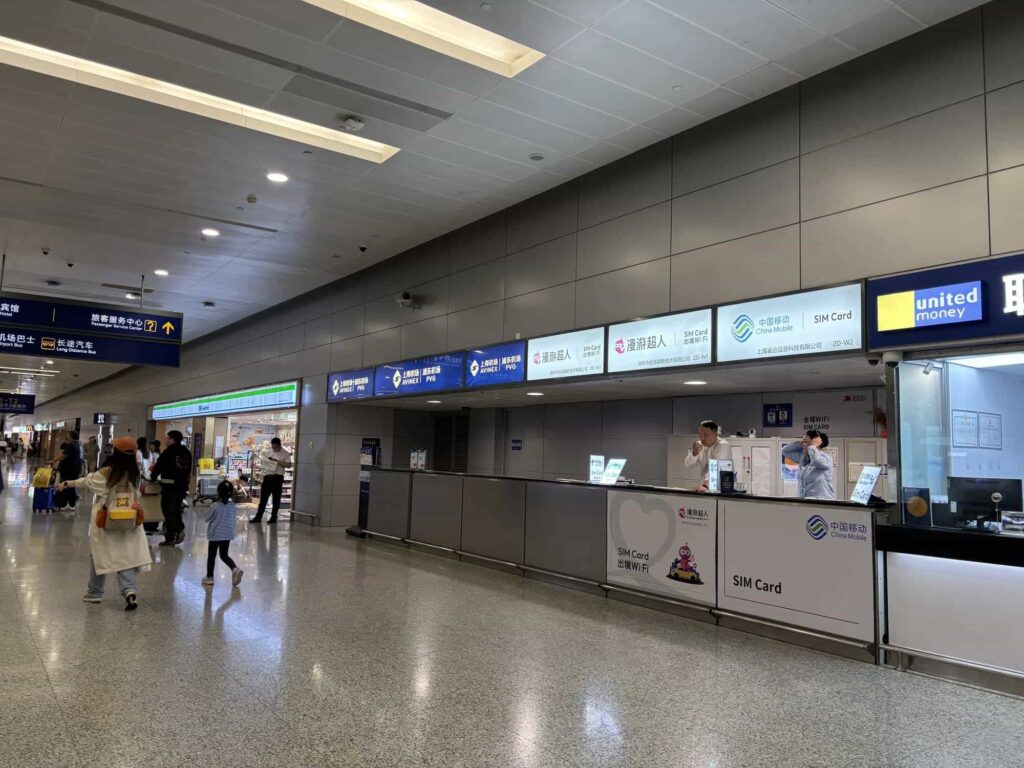
You can also buy a SIM at any official China Unicom store, identified by the red-and-white 中国联通 logo.
Bring your passport, as it’s required for identity registration before the SIM can be activated. If possible, choose a larger official branch, since these stores are generally more experienced with foreign passport registrations.
For store recommendations, see our city guides for Beijing, Shanghai, and Guangzhou.
A physical China Unicom SIM and a travel eSIM serve different needs. The biggest difference is that a local China Unicom SIM follows mainland China’s internet restrictions, while many travel eSIMs route data differently, so Google, YouTube, Facebook, and ChatGPT work without a separate VPN.
If you don’t want to buy a physical SIM at the airport or register one with your passport, you can buy a China Unicom travel eSIM before your trip. You’ll receive a QR code by email within 5–10 minutes after checkout and can install it before or after arriving in China.
The eSIM uses the China Unicom network, lets you keep your home SIM active for calls and OTPs, and gives you access to Google, YouTube, Facebook, and ChatGPT without a separate VPN.
Plans are available for 3, 5, 7, 10, 15, 20, and 30 days, with both fixed-data and daily-data options, starting from $4.90.
| Feature | China Unicom SIM | Travel eSIM |
|---|---|---|
| Chinese phone number | Yes | No |
| Passport required | Yes | No |
| Buy before arrival | No | Yes |
| Google & YouTube | Blocked, needs a VPN | Works without a VPN |
| Blocked, needs a VPN | Works without a VPN | |
| Keep your home SIM | No | Yes |
| Voice calls | Yes | Usually data only |
A physical SIM is best if you need a mainland Chinese phone number. A travel eSIM is usually the easier option if your priority is staying connected to international apps from the moment you land.
Each Chinese carrier has different strengths.
| Carrier | Best for |
|---|---|
| China Mobile | Remote and rural travel |
| China Unicom | Major cities and balanced pricing |
| China Telecom | Southern China |
If your trip is mostly in Beijing, Shanghai, Guangzhou, Shenzhen, Chengdu, or Xi’an, China Unicom performs very well for most travelers.
To activate and use a China Unicom SIM card, follow these steps:
To top up your China Unicom SIM card or eSIM, you can choose from various convenient methods:
By utilizing these top-up methods, you can ensure that your China Unicom SIM card or eSI
No. A standard China Unicom SIM follows mainland China’s internet restrictions. Those services won’t work unless you’re using a VPN or an international roaming solution.
Many international travel eSIMs route mobile data outside mainland China’s domestic internet infrastructure, so Google, WhatsApp, Instagram, and similar services usually work without a separate VPN.
Not necessarily. Both WeChat and Alipay can work with international phone numbers, but some local services and SMS verification systems are more convenient with a mainland +86 number.
Yes. Receiving SMS is free on China Unicom. You’re only charged for messages you send.
It depends on where you are. Both carriers can deliver very fast 5G speeds in major cities, while China Mobile generally has broader coverage in remote areas.
You can buy one at major airports and official China Unicom stores throughout China. You’ll need your passport for registration, and airport counters are usually the fastest option after landing.
China Unicom is a reliable choice for travelers spending most of their time in China’s major cities. A physical SIM works well if you need a local phone number, while a travel eSIM using the same network is usually the simpler option if your priority is getting online quickly and keeping access to international apps throughout your trip.
Get Started
Useful Guide