



YouTube has been completely blocked in mainland China since March 2009. No WiFi or standard mobile data plan in mainland China can access it. Travelers have two reliable options: a VPN set up before arriving, or a specialized China eSIM that bypasses the block without any VPN configuration.
This guide compares both methods to help you choose the best option for your trip.
Table of Contents
I. Is YouTube Banned in China?
Yes. YouTube is completely blocked in mainland China under China’s internet censorship known as the “Great Firewall” (防火长城). The ban has been in effect since March 2009, when videos of political protests in Tibet appeared on the platform and prompted the government to shut off access.
The block applies to:
- The website youtube.com
- The YouTube app
- YouTube videos embedded on third-party websites
- YouTube Shorts and YouTube Music
Where YouTube works normally:
YouTube remains freely accessible in Hong Kong, Macau, Taiwan, and the Hainan Free Trade Zone. These regions operate under different regulatory systems than mainland China. If your trip only involves these areas, you need no special preparation.
Chinese internet users have adapted by using local alternatives:
- Youku – The closest equivalent to YouTube
- Tencent Video – Popular for entertainment and dramas
- Bilibili – Favored by younger audiences for anime and gaming content
II. Why is YouTube Blocked in China? The Great Firewall Explained
China’s internet censorship operates through a system officially called the “Golden Shield Project” widely known outside China as the Great Firewall.
It uses IP blocking, DNS poisoning, deep packet inspection, and URL filtering to prevent access to platforms the government deems incompatible with its internet governance model.
- Censorship enforcement: YouTube’s open platform makes it difficult for Chinese authorities to filter sensitive content around topics like Tiananmen Square, Tibet or Taiwan before it reaches users.
- Domestic platforms development: Blocking YouTube creates market space for Chinese alternatives like Youku, Bilibili, and Tencent Video to grow into major platforms.
- Data sovereignty: China requires user data to remain within its borders under the government’s accessible infrastructure, while YouTube stores data on international servers.
The Great Firewall is actively maintained and upgraded. VPNs that worked last year may not work this year without updates.
III. What Happens When You Try to Access YouTube in China?
Travelers consistently report the same experience:
- The page simply doesn’t load. Your browser will show a loading icon indefinitely before timing out with a generic connection error: “This site can’t be reached” or “ERR_CONNECTION_TIMED_OUT.”
- No explanation is given. The system doesn’t tell you the site is blocked. It mimics a standard connectivity failure.
- Embedded videos break. Any website using YouTube embeds (news sites, travel blogs, documentation) will show blank gray boxes or broken elements.
- The YouTube app shows nothing. The app opens but fails to load any content or search results.
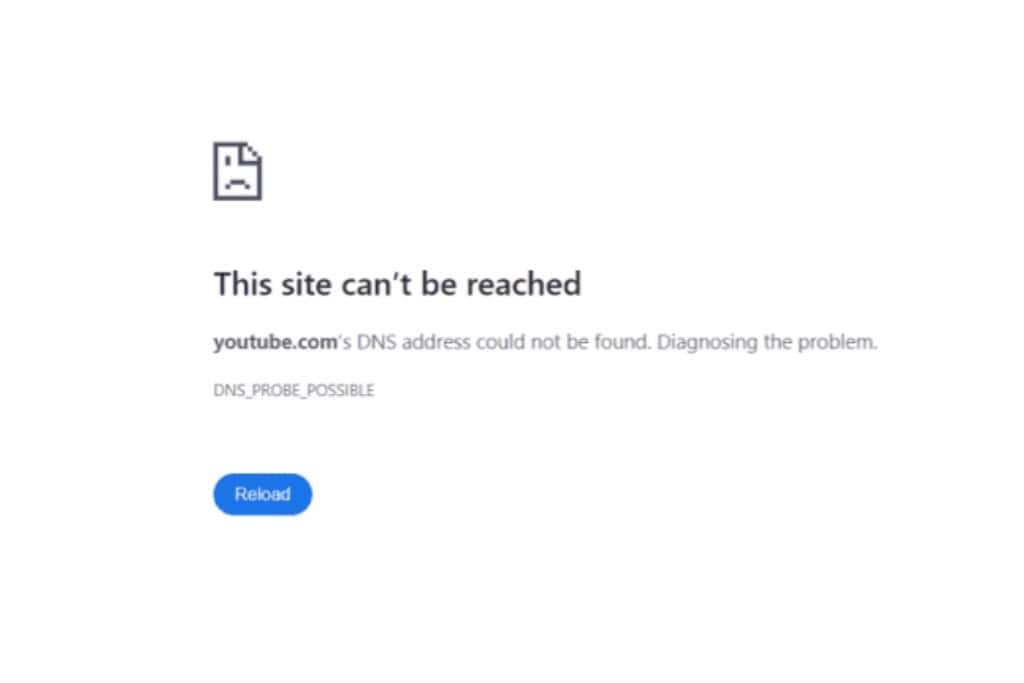
This is not a WiFi issue or a slow connection issue. It is the same on every network in mainland China.
IV. How to Watch YouTube in China (2 Reliable Methods)
YouTube is blocked in China due to the country’s internet restrictions, but with proper preparation, you can still access the platform during your visit.
Method 1: VPN (Virtual Private Network)
A VPN encrypts your traffic and routes it through a server located outside China, often Hong Kong, Singapore, or Japan. This makes your connection appear to originate from a country where YouTube is accessible.
Requirement:
Install before you land. VPN websites and app store listings for VPN apps are blocked inside China. If you arrive without a VPN installed, downloading one is extremely difficult. This is the most common mistake travelers make.
What to look for in a VPN for China:
- Obfuscated / stealth servers: Standard VPN protocols are detectable by the Great Firewall; obfuscation disguises VPN traffic as regular HTTPS traffic
- Server locations in Hong Kong or Singapore. Closer servers mean faster speeds
- Active China updates. The Great Firewall updates constantly; choose a provider that includes China-specific server status
Limitations:
- Connection can be unstable during government crackdowns (major political events, national holidays)
- Requires ongoing subscription and technical setup
- Speed depends on server load and distance
Is using a VPN legal for tourists in China?
VPN use without government authorization technically violates Chinese internet regulations. However, there are no documented cases of foreign tourists being fined or arrested solely for personal VPN use. Enforcement actions have targeted VPN providers and distributors, not individual travelers.
Most expats, business travelers, and tourists use VPNs daily. The practical risk for short-term visitors using a VPN for personal browsing is considered low, but the legal ambiguity exists, and policies can shift.
Method 2: China eSIM with VPN Compatibility
For most travelers, a specialized China eSIM offers the most convenient solution. These digital SIM cards provide built-in access to global websites without additional configuration.
| VPN | China eSIM | |
|---|---|---|
| Setup | Requires install, configure, test before travel | Just scan QR code before arrival |
| Activation | Immediately if configured before landing | Immediately upon arrival |
| Stability | Affected by location | Consistent across China |
| Price | $5-15/month subscription | From $7 for 5-day plans |
| Legal | Technically unauthorized | Standard international data routing |
Chinaesim.com offers several advantages that make it ideal for tourists: No VPN required for most plans – access YouTube, Google, and other services directly Affordable pricing starting from just $7 for 5-day plans with sufficient data Instant delivery – receive your eSIM via email immediately after purchase Simple activation – just scan a QR code before your trip
No VPN required for most plans: Access YouTube, Google, and other services directly
Affordable pricing: Starting from just $7 for 5-day plans with sufficient data
Instant delivery: Receive your eSIM via email immediately after purchase
Simple activation: Just scan a QR code before your trip
V. FAQs
Is YouTube blocked in Hong Kong?
No. YouTube is freely accessible in Hong Kong as the region operates under different internet regulations than mainland China. Hong Kong maintains its own internet infrastructure without the content restrictions found in mainland China.
Can I access YouTube with mobile data in China?
No with standard SIMs, but possible with specialized eSIMs. Regular Chinese mobile data plans block YouTube and other international sites, but services like chinaesim.com offer “No VPN required” data plans that allow direct access to YouTube.
Does YouTube work in hotels or airports in China?
No. Neither hotel WiFi nor airport networks in mainland China allow YouTube access. These networks operate under the same national internet restrictions as all other connections in mainland China and are often subject to even stricter monitoring.
What if I forgot to install a VPN before arriving in China?
VPN websites and most VPN app store listings are blocked inside China, making it difficult to download one. You can use a friend’s mobile hotspot on an international roaming connection to access the App Store
Can I use YouTube with regular mobile data in China?
No. Standard Chinese SIM cards and mobile data plans still operate within the Great Firewall and block YouTube.
Does YouTube work on hotel WiFi in China?
Hardly. The vast majority of hotel in mainland China operates under the same national internet restrictions. Some international 5-star business hotels provided VPN-enabled networks for foreign guests, but this is increasingly uncommon.
Final Words
YouTube will remain blocked throughout mainland China and will not work on any standard Wi-Fi or mobile data connections. Discovering this after arrival will cause unnecessary trouble for tourists.
The most important thing is preparation before the trip. Once you are in mainland China, the access options will be significantly limited, whether it’s downloading a VPN or buying a new eSIM. So plan ahead, set realistic expectations, and your trip will go much more smoothly.